Octillery
Jet Pokémon

It traps enemies with its suction- cupped tentacles then smashes them with its rock-hard head.
- Height
- 0.9 m
- Weight
- 28.5 kg
- Base XP
- 168
- Catch
- 75 /255
- Happy
- 70
- Hatch
- 20 steps
- HabitatSea
- Body shapeTentacles
- ColourRed
- Growth rateMedium
- Egg groupsWater1, Water2
- RarityStandard
Octillery is the Jet Pokémon, a pure Water-type introduced in the second generation of Pokémon. It takes the form of a robust, barrel-bodied cephalopod with a striking crimson-red coloration covering its rounded mantle and the length of its eight tentacles. Each tentacle ends in prominent suction cups, and the creature carries itself close to the seafloor, moving with deliberate, flowing motion. Its round head is notably dense and hard, almost like polished stone, a feature that plays a central role in its hunting behavior. Compared to a standing adult human, Octillery is a compact creature, roughly knee to hip height when at rest, though its tentacles can extend considerably farther. The overall silhouette is unmistakable: a thick central dome ringed by radiating arms, each lined with gripping discs. Its eyes are large and alert, well adapted to the low-light conditions of the ocean floor.
Octillery makes its home in saltwater environments, preferring the rocky terrain of ocean floors and the crevice-riddled beds of coastal reefs. It is most commonly encountered in temperate to tropical seas, where the abundance of rock formations provides the hiding spots it favors. The species does not tend to congregate in large numbers; individuals are typically solitary outside of mating season, each claiming a section of the reef or seafloor as its own hunting ground. Rocky underwater caves and narrow passages between boulders serve as both shelter and ambush points. Octillery has been documented across multiple regions wherever the seafloor offers sufficient structural complexity. It is not considered a migratory species, maintaining a fairly fixed territory year-round. Divers and researchers occasionally encounter them in moderately deep coastal waters, though Octillery rarely surfaces on its own.
Octillery is an opportunistic carnivore that hunts using the full arsenal of its anatomy. When prey approaches within range, it strikes by extending one or more tentacles, using the suction cups to lock onto the target with extraordinary gripping force. Once prey is immobilized, Octillery delivers crushing blows with its dense, hardened head. Beyond this close-range approach, it is also capable of firing powerful jets of water and bursts of ink with considerable accuracy, the precise behavior that earns it the Jet Pokémon classification. Field researchers note that Octillery tends to wedge itself into rocky hollows during periods of rest, bracing with its tentacles and effectively anchoring itself in place. This habit of occupying tight spaces carries over into its temperament: it is a territorial creature that does not welcome intrusion into its chosen resting spot. Toward humans it is generally wary rather than aggressive, retreating before attacking unless cornered.
In battle, Octillery brings a combination of physical and special offensive power that few Water-types can match at its size. Its two equal offensive strengths allow it to strike from either direction, making it difficult for opponents to predict which angle of attack to prepare for. Its standard ability, Suction Cups, prevents opposing Pokémon from forcibly removing it from battle through moves that would normally displace it, giving Octillery full control over when it exits a fight. Its secondary standard ability, Sniper, dramatically amplifies the power of critical hits, tripling their damage output rather than the usual doubling, which rewards trainers who build strategies around precise, well-timed strikes. Its hidden ability, Moody, introduces a volatile element by randomly raising one stat sharply and lowering another each turn, creating unpredictable swings in its capabilities. The chief limitation Octillery carries is its low speed, which means faster opponents frequently act before it does. Its Water typing leaves it exposed to Grass-type and Electric-type attacks, though it holds up reasonably well in most other matchups.
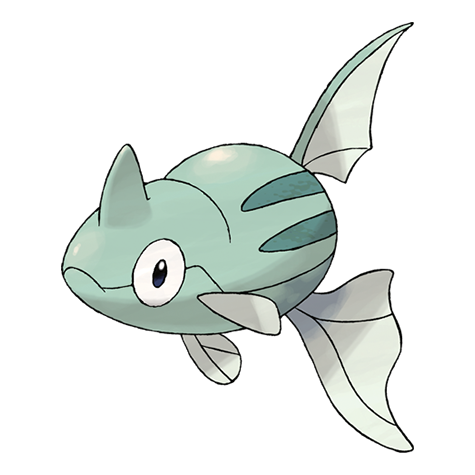
Octillery is the final stage of a two-member evolutionary line, developing from Remoraid once that smaller fish Pokémon accumulates enough battle experience. The transformation is remarkable, shifting from a sleek, streamlined fish into the broader, tentacled form of Octillery, a change researchers often cite as one of the more striking examples of dramatic metamorphic evolution in the Pokédex. The two stages share the underlying trait of high-pressure water propulsion, even as their outward appearance suggests unrelated creatures. Octillery carries no further evolutionary stage and represents the fully matured form of the line. Its combination of versatile offensive capability and the powerful Sniper ability has made it a subject of ongoing study among battle researchers interested in critical hit mechanics. For trainers who favor patient, calculated approaches to battle, Octillery remains a dependable and somewhat underappreciated partner from the second generation of Pokémon onward.