Weepinbell
Flycatcher Pokémon
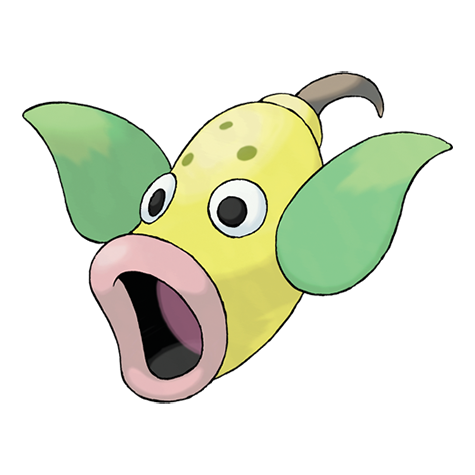
It spits out POISONPOWDER to immobilize the enemy and then finishes it with a spray of ACID.
- Height
- 1.0 m
- Weight
- 6.4 kg
- Base XP
- 137
- Catch
- 120 /255
- Happy
- 70
- Hatch
- 20 steps
- HabitatForest
- Body shapeBlob
- ColourGreen
- Growth rateMedium Slow
- Egg groupsPlant
- RarityStandard
Weepinbell is the Flycatcher Pokémon, a dual Grass and Poison type that originates from the first generation of Pokémon. Its body is roughly spherical and bulbous, covered in a vivid yellow-green that brightens slightly around its enormous, perpetually open mouth. That mouth dominates the front of its form, rimmed with undulating, leaf-like lips that give it an almost comical expression at rest. From the top of its body, a thick, hooked appendage curves backward, purpose-built for latching onto branches and hanging in place for extended periods. Two broad, dark-green leaves jut from either side of its torso, serving as rudimentary limbs. Compared to an adult human, Weepinbell stands roughly knee-high, making it a compact creature, but its wide-mouthed silhouette and that prominent hook make it unmistakable among forest-dwelling Pokémon.
Weepinbell makes its home in forested biomes, particularly dense woodlands where the canopy is tall enough to offer reliable hanging points and where insect life is abundant. In Kanto, trainers most frequently encounter it along forest routes and in the tall grass bordering thick stands of trees. It shows a preference for humid, temperate environments where foliage is dense year-round, providing both camouflage and a consistent food supply. Weepinbell is a solitary Pokémon by nature. During daylight hours it hangs motionless from a branch, hook engaged, and its coloring blends well enough with surrounding leaves that it can go unnoticed even by practiced eyes. Activity increases around dusk and continues through the night, when low light and ambient forest noise give it a natural advantage when ambushing prey.
Weepinbell is a patient and methodical predator. It spends long stretches hanging in stillness, waiting for insects or small ground-dwelling creatures to pass beneath it. When prey comes within range, it acts in a precise, two-stage sequence: it releases PoisonPowder into the air to immobilize the target, then delivers a spray of Acid to finish the encounter. The lining of its mouth produces a potent digestive fluid that begins breaking down organic material almost on contact, allowing it to process prey efficiently. Despite this predatory nature, Weepinbell does not seek confrontations with humans or Pokémon significantly larger than itself. Trainers who spend time with it consistently report that it becomes calm and manageable once it grows accustomed to familiar scents and presences. In the wild, individuals space themselves across their woodland territories using trace chemical markers derived from their own toxic secretions, minimizing direct competition with others of their kind.
Weepinbell's primary ability is Chlorophyll, which doubles its Speed under conditions of strong sunlight. This is a transformative effect for a Pokémon that ordinarily moves at only a modest pace, and it opens the door to meaningful roles on sun-oriented teams. Its hidden ability, Gluttony, accelerates Berry consumption, causing any held Berry that activates at low health to trigger at below half of maximum health rather than the usual quarter threshold, a subtle but useful edge in prolonged battles. Offensively, Weepinbell leans toward physical attack while maintaining nearly comparable special attack, making it a reasonably flexible attacker. Its Grass and Poison typing provides solid coverage against Water, Fairy, Grass, and Rock types, but it carries clear vulnerabilities to Flying, Fire, Ice, Psychic, Bug, Ground, and opposing Poison moves. Its defensive stats are modest, which means it rewards trainers who use it proactively rather than reactively, landing its attacks before opponents can exploit its weaknesses.
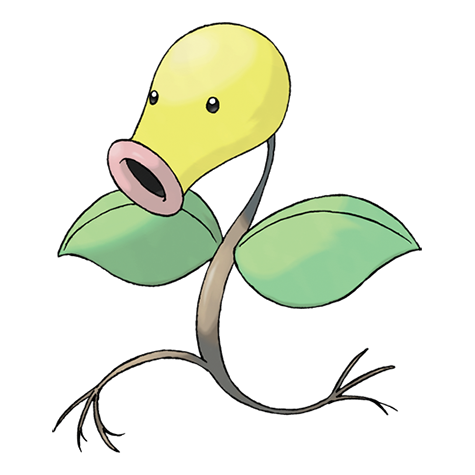
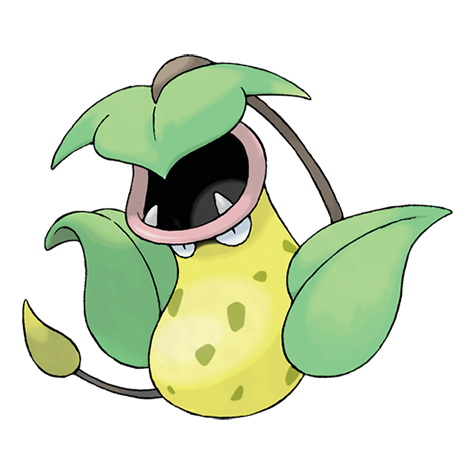
Weepinbell occupies the middle stage of a three-part evolutionary line. It evolves from Bellsprout upon reaching level twenty-one, gaining a more robust and carnivorous form in the process. The line concludes with Victreebel, which Weepinbell evolves into when exposed to a Leaf Stone, transforming it into a large, pitcher-plant predator capable of engulfing prey entirely. This dependence on a stone item for final evolution places Weepinbell among the earlier examples in the Pokédex of an evolutionary line that cannot complete itself through leveling alone, requiring instead a deliberate resource investment by the trainer. Researchers who study the overlap between botanical biology and Pokémon physiology often use Weepinbell as a case study in progressive carnivorous adaptation, noting how each stage of the line escalates both the complexity and the lethality of the plant's hunting apparatus. For trainers, it remains a dependable and accessible mid-game option with a clear growth trajectory and genuine competitive relevance when the conditions favor it.