Ursaring
Hibernator Pokémon
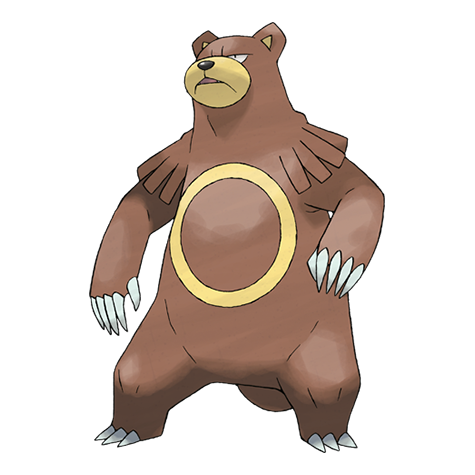
Although it is a good climber, it prefers to snap trees with its forelegs and eat fallen BERRIES.
- Height
- 1.8 m
- Weight
- 125.8 kg
- Base XP
- 175
- Catch
- 60 /255
- Happy
- 70
- Hatch
- 20 steps
- HabitatMountain
- Body shapeUpright
- ColourBrown
- Growth rateMedium
- Egg groupsGround
- RarityStandard
Ursaring is a Normal-type Pokémon introduced in Generation Two, classified by researchers as the Hibernator Pokémon. It is a large, powerfully built creature that stands fully upright on two legs, giving it a silhouette that is broadly humanoid yet unmistakably ursine. Its body is covered in dense, coarse brown fur, and it is considerably larger and more heavily muscled than an adult human, carrying a mass that speaks to its role as one of the more formidable physically oriented species in the Johto region. The single most distinctive mark on Ursaring's body is the prominent circular ring pattern on its chest, rendered in a pale cream or yellowish tone against the surrounding brown fur. This ring is the origin of the species name, combining the classical term for bear with a reference to that defining circular mark. Its broad muzzle is lighter in color than the rest of its coat, its rounded ears sit wide on a large flat-faced head, and its forelimbs are equipped with long, heavy claws built for sustained physical labor.
Ursaring establishes itself in mountainous terrain and the dense highland forests that border steep ridgelines, favoring rugged environments where natural shelter and a reliable abundance of plant food are found close together. Within Johto, confirmed sightings cluster around high-altitude routes and the remote wilderness extending toward Mount Silver, though individuals have been encountered at lower elevations when seasonal food sources compel them to range further. This Pokémon is emphatically solitary, and each adult maintains a large personal territory that it signals to rivals by driving its claws deep into tree trunks, leaving distinctive gouges that persist through several seasons. Because every individual requires an extensive foraging range, population density stays low compared with common lowland species. Ursaring is most active during the cooler morning and evening hours and retreats to cave systems or dense undergrowth as temperatures fall, eventually entering extended hibernation through the coldest part of the year.
The approach of hibernation dominates much of Ursaring's active season, and in the weeks before it withdraws it enters a sustained period of intensive feeding to accumulate the fat reserves it will rely on through dormancy. Berries form the core of its diet, supplemented by roots, bark, and opportunistic finds of whatever the mountain environment offers. Although Ursaring is a capable climber, field researchers note that it consistently prefers a more direct strategy: rather than scaling trees to reach fruit on high branches, it applies the full force of its forelegs to snap the trunk, bringing the tree and its contents down to ground level. The claw marks left along its foraging routes serve simultaneously as territorial claims and as a kind of navigational record, helping Ursaring retrace productive feeding grounds across a wide area. Toward other Pokémon and humans it is not instinctively aggressive when left undisturbed, but disturbance of its territory or resting sites provokes a response that experienced trainers consistently describe as swift and overwhelming.
In battle, Ursaring is defined by its exceptional physical attack strength, making it one of the hardest-hitting Normal-type Pokémon available to a trainer. Its primary standard ability, Guts, converts the disadvantage of a major status ailment into a significant combat asset: when Ursaring is burned, paralyzed, poisoned, frozen, or put to sleep, its attack power rises sharply, and many competitive trainers deliberately trigger this by equipping items that inflict a self-targeted status condition at the start of the encounter. The alternate standard ability, Quick Feet, operates on the same logic but redirects the bonus toward speed rather than strength, meaningfully improving what is otherwise one of Ursaring's more limited attributes. Its hidden ability, Unnerve, takes a different approach, preventing an opponent's held Berry from activating during the battle and cutting off access to any recovery or stat-correction that Berry would have provided. As a pure Normal type, Ursaring carries a complete immunity to Ghost-type attacks but has no offensive type advantage of its own and is vulnerable to Fighting-type moves, which land with increased force. Its relatively modest speed means it performs best in situations where it can capitalize on a status condition and deliver powerful physical hits before opponents mount a sustained counteroffensive.
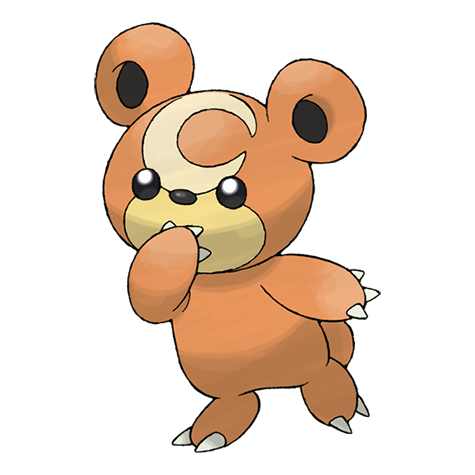
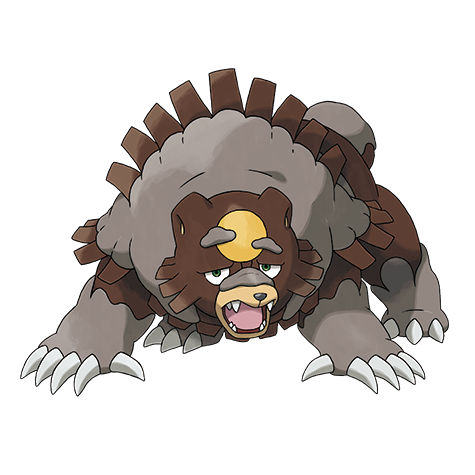
Ursaring occupies the middle stage of an evolutionary line that spans two separate generations of Pokémon research. It develops from Teddiursa, a small and comparatively gentle-seeming bear cub Pokémon that evolves upon reaching sufficient experience. Later researchers documented a further evolution, Ursaluna, achieved through a rare Peat Block item used under the light of a full moon, representing an ancient form whose rediscovery added unexpected depth to the lineage. This three-stage line, with its rarity of evolved stages and the unusual condition required for the final form, makes the Ursaring family a recurring subject in evolutionary biology studies. Among competitive trainers, Ursaring commands sustained interest precisely because its Guts ability rewards careful item strategy and status management, rewarding preparation over raw type matchup. Field researchers value it equally, as its territorial behavior, hibernation biology, and foraging intelligence offer some of the most accessible parallels to real large-predator ecology found anywhere in the mountain Pokémon fauna.