Jumpluff
Cottonweed Pokémon
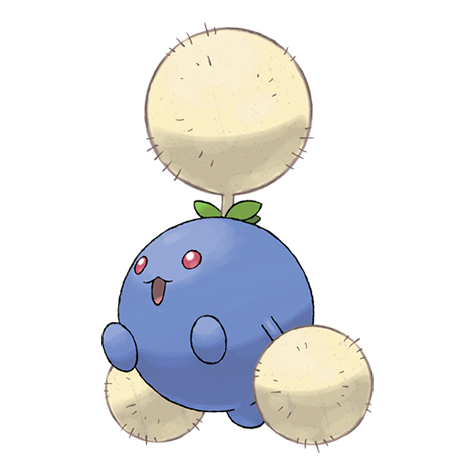
Once it catches the wind, it deft ly controls its cotton-puff spores to float, even around the world.
- Height
- 0.8 m
- Weight
- 3.0 kg
- Base XP
- 207
- Catch
- 45 /255
- Happy
- 70
- Hatch
- 20 steps
- HabitatGrassland
- Body shapeUpright
- ColourBlue
- Growth rateMedium Slow
- Egg groupsFairy, Plant
- RarityStandard
Jumpluff is the Cottonweed Pokémon, a Grass and Flying type that made its debut in the Johto region during the second generation of Pokémon discovery. It presents a small, roundish silhouette that stands only about as tall as a young child's knee, with a vivid sky-blue body at its center. Three large, rounded pompoms of soft white cotton define this species immediately — one sits atop its head and one extends from each of its two short, outstretched limbs. These cotton masses are not merely decorative; they are the heart of what Jumpluff is and how it moves through the world. The face is simple and calm, framed by two wide dark eyes that give it a composed, faintly serene expression. Jumpluff is extraordinarily light for a creature of its apparent volume, the hollow and airy cotton accounting for much of its bulk while contributing almost nothing to its weight.
Jumpluff favors open grassland environments where steady wind currents give it reliable lift throughout the day. It is most at home in temperate and warm climates with long growing seasons and open skies, and in the Johto region it is commonly spotted drifting above meadows and the broad plains that border forested highlands. Its populations are naturally dispersed rather than concentrated, since the wind-riding lifestyle that defines the species tends to scatter individuals across enormous stretches of territory. Jumpluff is typically solitary while aloft, though loose clusters may form near flowering meadows when conditions are favorable. Seasonal wind patterns govern its movements, and individuals have been documented traversing entire continents and crossing open water on favorable currents, a journey the species is fully capable of completing. It is most active during daylight hours when thermal updrafts are strongest, retreating to the shelter of tall grass or tree canopy when winds ease at night.
Jumpluff passes most of its life in the air, riding wind currents with patient precision by adjusting the spread and density of its cotton pompoms to steer around obstacles or redirect its path. As it travels, it passively sheds tiny spores from those cotton masses, contributing to the dispersal of plant material across wide stretches of landscape in a way that benefits the surrounding ecosystem. This behavior is instinctive and continuous, requiring no deliberate effort on the part of the individual. Jumpluff is gentle and non-confrontational by temperament, and when it perceives a threat it typically retreats on the next available breeze rather than holding its ground. It tends to follow warm updrafts through spring and transition to coastal winds as the seasons shift toward autumn. A widely repeated piece of field lore among Johto-region trainers holds that spotting a Jumpluff passing calmly overhead on a clear morning reliably indicates fair weather ahead.
In battle, Jumpluff is defined above all by its extraordinary speed, which allows it to act before the vast majority of Pokémon it faces. Under intense sunlight its Chlorophyll ability doubles that already considerable pace, placing it among the fastest Pokémon in play under those conditions. Its second standard ability, Leaf Guard, prevents major status conditions such as sleep, paralysis, and burn from taking hold while sunlight remains active, giving it meaningful durability within sun-focused team strategies. The hidden ability Infiltrator allows its moves to pass through opponent-set defensive barriers including Reflect, Light Screen, and Safeguard, ensuring that no screen strategy can safely contain it. As a Grass and Flying type, Jumpluff resists Water, Grass, and Fighting, and it is fully immune to Ground. However, Ice poses a particular danger, and it is also threatened by Fire, Rock, Flying, Poison, Electric, and Bug. Given its modest attacking power, Jumpluff performs best in a supporting role, applying pressure through speed, status, and utility rather than direct offensive output.
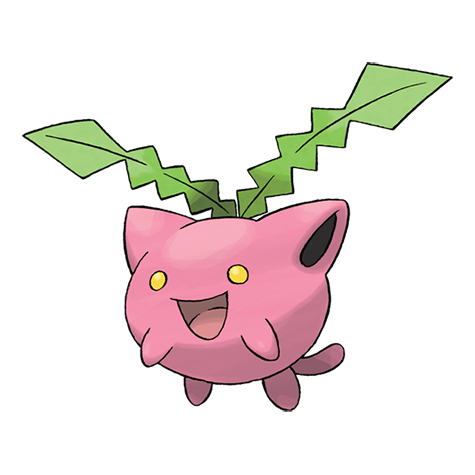
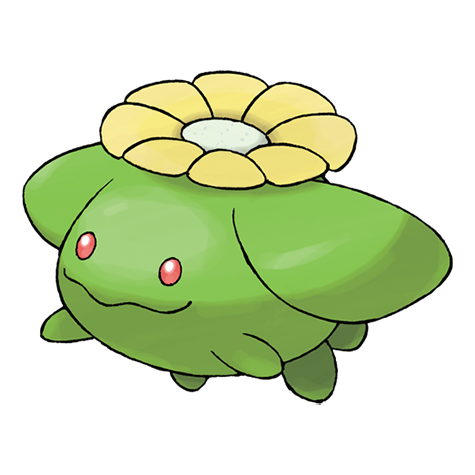
Jumpluff is the third and final stage of an evolutionary line that begins with Hoppip, a tiny pink Grass and Flying type that appears almost too fragile to survive a stiff breeze. Hoppip evolves into Skiploom through experience gained in battle, growing somewhat and sprouting a small bloom atop its head that tracks sunlight throughout the day. Skiploom in turn evolves into Jumpluff at a higher level of maturity, the flower giving way to the three-pompom silhouette that marks full development in the line. The entire family is among the lightest in the Pokédex, with each stage nearly weightless. Researchers find Jumpluff valuable as a subject in ecological dispersal studies, since its passive spore-spreading behavior over long wind-borne journeys represents one of the most effective seed and pollen distribution mechanisms observed in any Pokémon species. Trainers prize it for speed-oriented strategies, especially within sun-team compositions, and it holds an enduring place in Johto regional culture as a symbol of gentle wandering and the freedom of open skies.